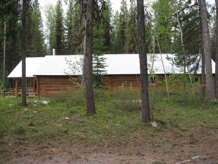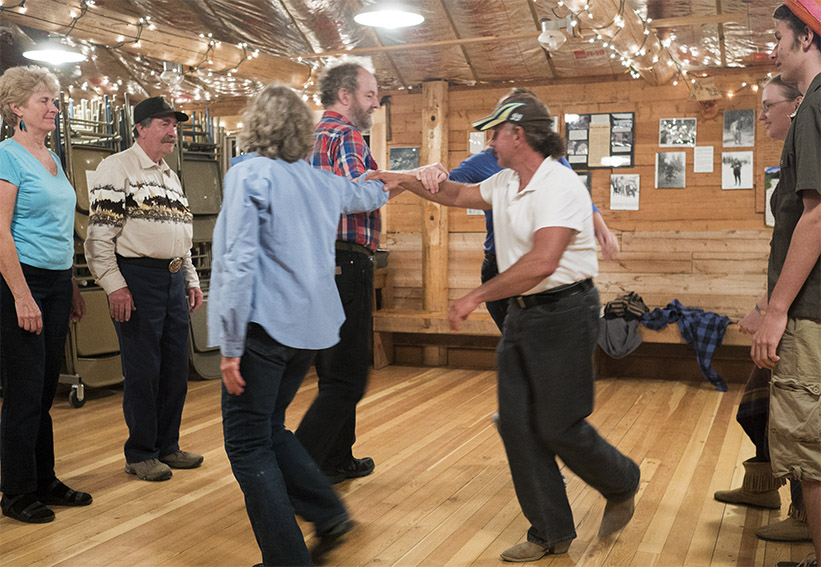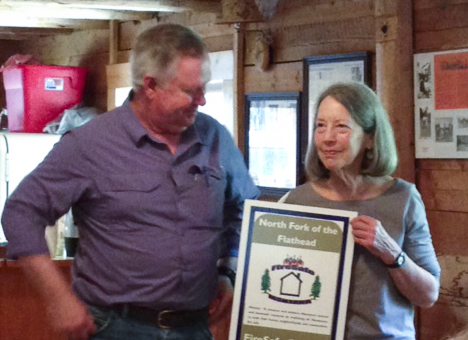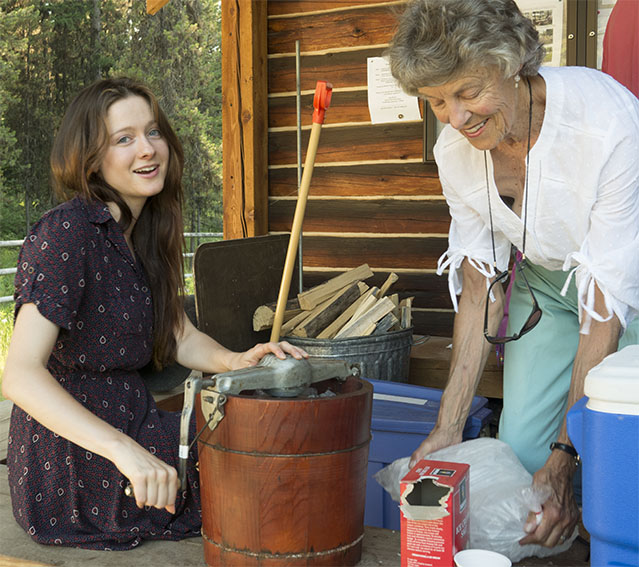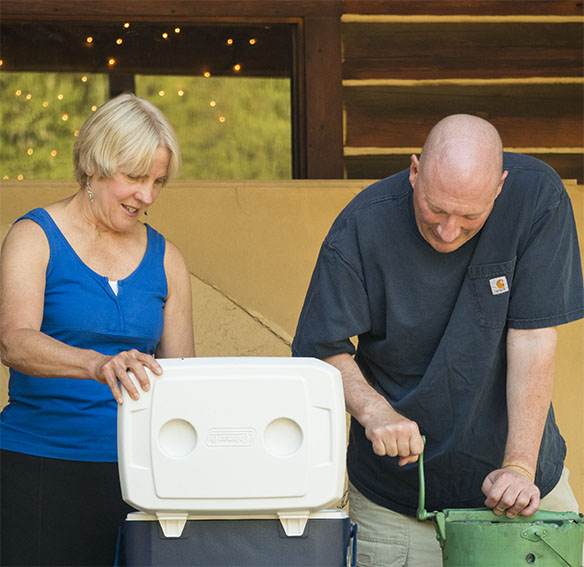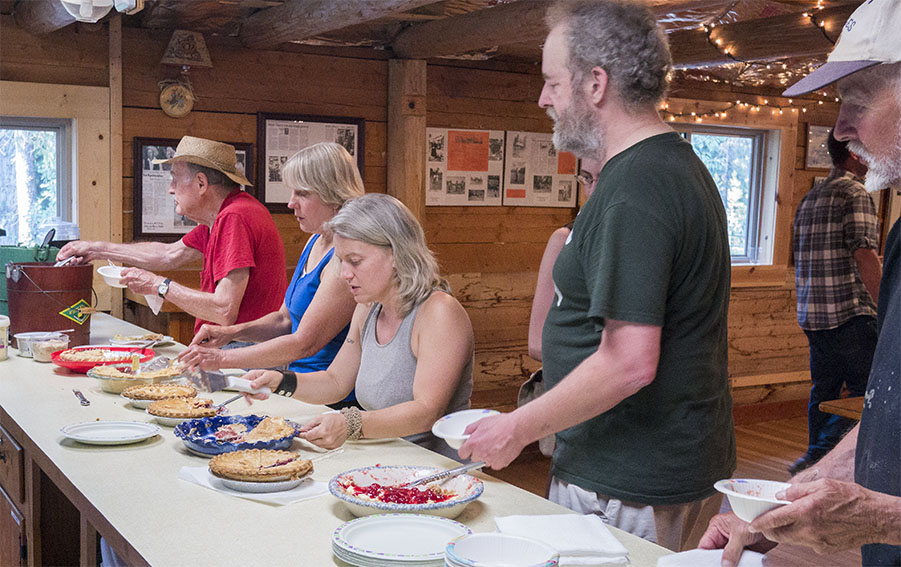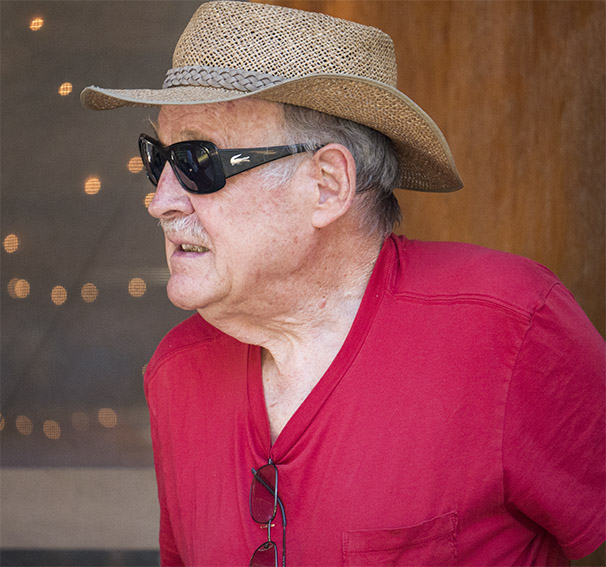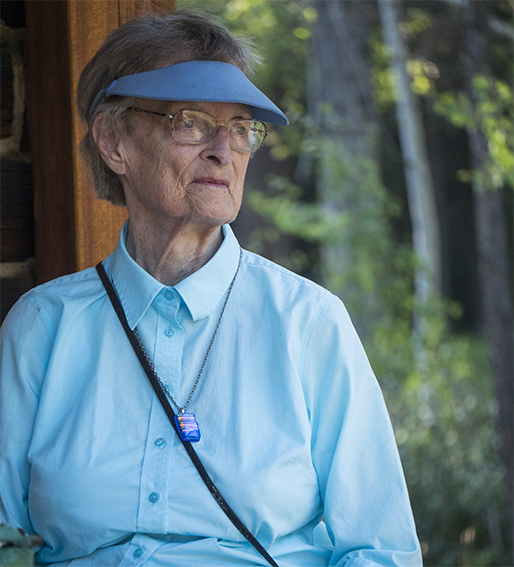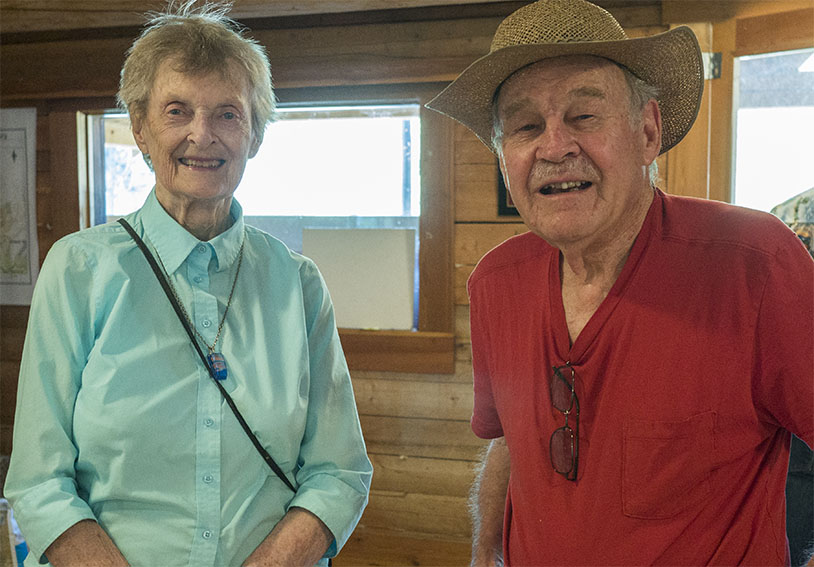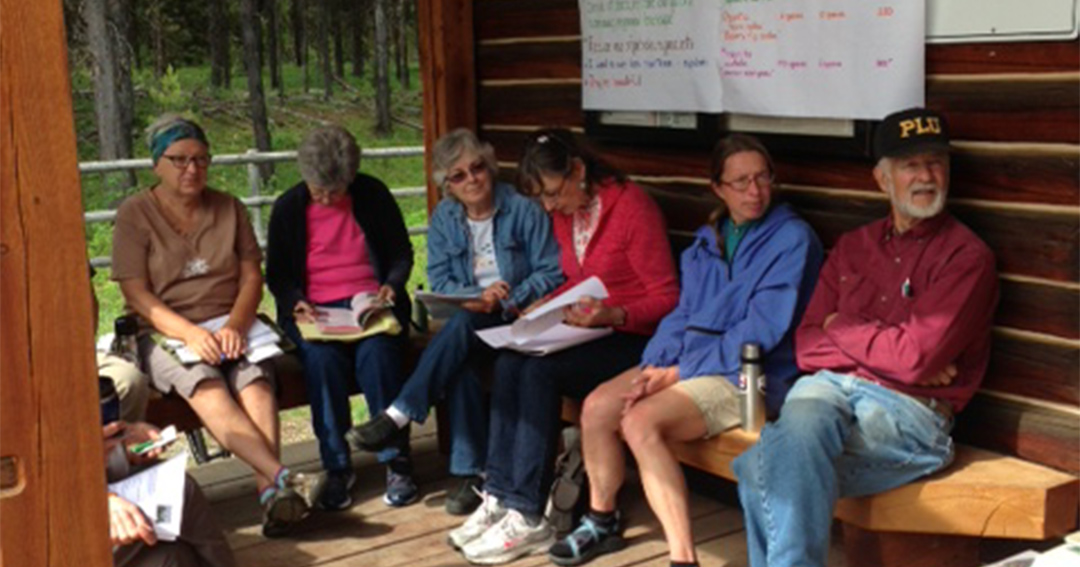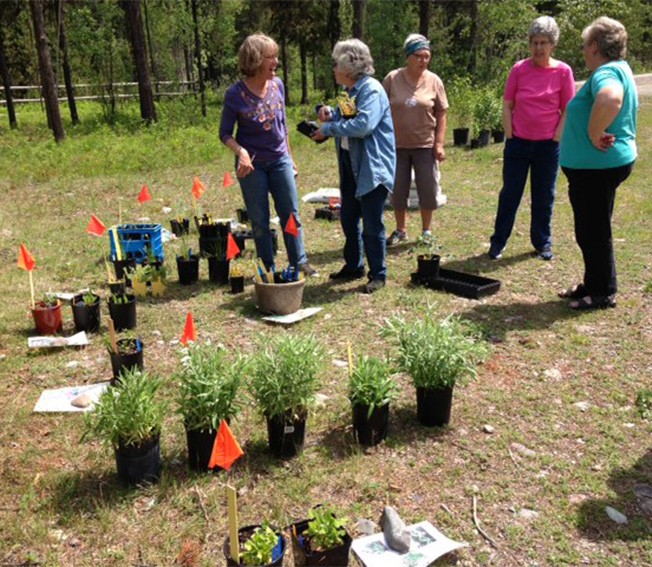
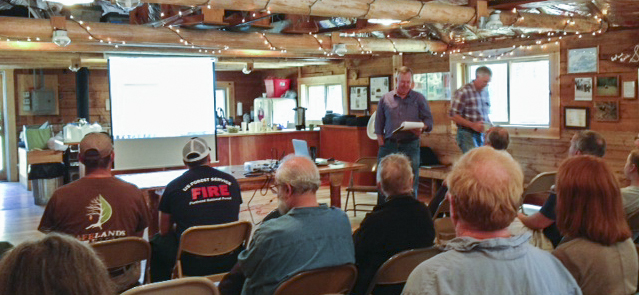
North Fork “plant nerds” gathered at the Community Hall on Tuesday morning for a workshop on Gardening with Native Plants. Because it was a beautiful day, the workshop was held on the front porch. Terry Divoky from Wildflower, who has been leading this workshop in our community for many years, and Stacey Jacobsen Burgard from the Center for Native Plants, presented information, answered questions, and sold native plants that they had brought with them. After attending this workshop for several years, many North Fork gardeners have transformed their home sites by landscaping with native plants. Next year, we plan to organize this workshop as a field trip to see native plants in North Fork yards.
Category: Committees
Gardening with Native Plants Workshop
Don’t forget about the Gardening with Native Plants Workshop at Sondreson Hall led by Terry Divoky; native plants will be available for sale. She will be joined by Andrew Beltz. This will take place on Tuesday, June 24th starting at 10AM at Sondreson Hall.
Both Terry and Andrew will be bringing plants to the workshop to sell. Want to preorder so that you can get just the plants you want? Open this preorder list, make your selections, then email Andrew at andrew@forestoration.org.
North Fork Homesteads Resource Brief
One of Glacier’s many cultural resources is highlighted in this brief. The homesteads in the North Fork not only remind us of the settlers in this area and how they lived, but also about early park history and controversy. Take a look at the updated brief on the CCRLC’s website at http://www.crownscience.org/download_product/1218/0
The North Fork’s newest noxious weed
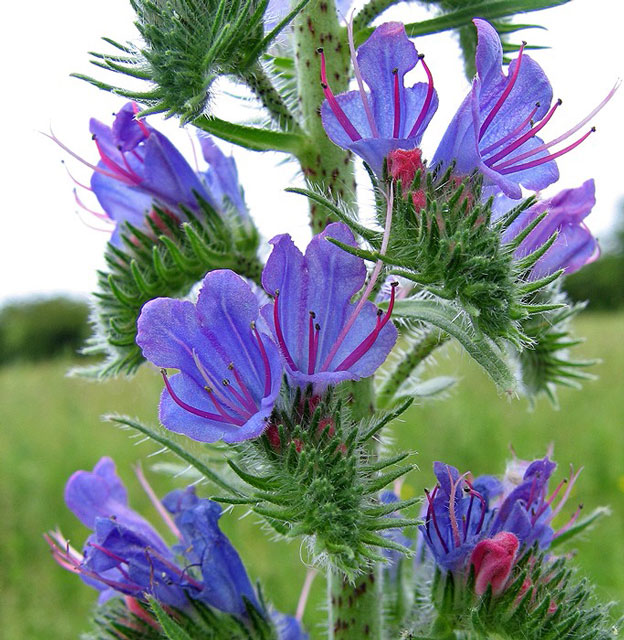
Trish Hoffman, USFS Weed Specialist, wanted to provide us with a “heads up” that a noxious weed new to the North Fork has been discovered just north of the border on the Canadian side in the river corridor. Spring runoff erosion will likely be bringing this new invader, Blueweed, onto North Fork properties that are adjacent to the Wild and Scenic River Corridor, if it hasn’t brought them south previously.
It grows to about 2 to 5 feet tall. The flowers are in varying shades of blue. The stamens are pink. From a distance blueweed has been confused with lupine.
Blueweed contains an alkaloid that is toxic to humans and animals. It attacks the liver. Blueweed is pullable, but gloves and a long-sleeved shirt must be used because the stiff hairs on the plant make handling it similar to handling fiberglass. Small infestations can be pulled or dug up and bagged. If a larger infestation is found, call the Flathead County Weed Department for advice on using herbicide. If blueweed is found growing with a hay crop, it will ruin the hay when baled and stored due to the plant’s high moisture content. (I know this probably applies to only a couple of North Fork landowners.)
Early identification of this new invader and eradication of it while the infestations are small are critical to effective and relatively inexpensive control. Besides, it’s just part of being a good steward of the land and a good neighbor. For more information, contact Trish Hoffman at 406-758-3510.
Applications for 2015 Environmental Quality Incentives Program (EQIP)
The Natural Resources Conservation Service (NRCS) is taking applications for 2015 Environmental Quality Incentives Program (EQIP).
The program provides funding to forest landowners to help them manage their forest. Practices offered under EQIP are: Pre-Commercial Thinning, Slash Treatment (pile& burn or chipping), Fuel Break around buildings, Tree Planting, and Noxious Weed Control. The signup is continuous but the deadline to qualify for funding for spring 2015 is June 1, 2014. Please contact the local NRCS office in Kalispell at 752-4242 X 3 for more information or to obtain an application.
Fire Mitigation Committee Report, Late Winter 2014
2014 Firewise Day
For the ninth year, the North Fork has been recognized as a Firewise Community. One of the requirements for recognition is holding an annual Firewise Day event.
This year, the Fire Mitigation Committee will sponsor its Firewise workshop on July 16, 2014 from 9:30 to noon, preceding the Summer Interlocal meeting. The program will include a powerful video about several recent, destructive fires in Colorado. The fire behavior depicted in the video is similar to that seen in large fires on the North Fork. A principal message of the video is that firefighters can’t save structures if landowners haven’t done their part by modifying the fuels around them. Tentatively, several landowners will showcase the fuels modification work that they have done on their properties. Planning for the workshop continues.
Hazardous Fuels Grants
The DNRC awarded the North Fork its fourth hazardous fuels grant in the Fall of 2013, this one in the amount of $91,000. Monies are available on a cost-share basis, with the grant paying 75% of the cost of an eligible project and the landowner contributing the remaining 25%. A primary objective of the grant is to thin vegetation on private land along Trail Creek Road, making it a safer exit route in the event another large fire visits the area. The committee will be working with private landowners, the Forest Service and possibly Flathead County to accomplish the work.
Funds under the third hazardous fuels grant are almost exhausted. The grant has been used to connect landowners’ treatments with those on public lands, as well as to treat around homes. For those interested in applying for grant monies, additional information is available on the NFLA web site.
Mapping Project
The Fire Mitigation Committee hopes to update maps of complementary fuels reduction work that has been done on public and private land since the Wedge Canyon Fire in 2003. Wally Bennett, Type 1 Incident Commander during the Wedge fire, anticipates that the work will make a big difference in future fire behavior and suppression efforts on the North Fork. He spoke at our successful and well-attended 2013 Firewise workshop, after visiting many of the sites. Updated maps would enable the North Fork landowners and their agency partners to see what they have accomplished in the last ten years.
Thanksgiving at the hall was rich in community spirit
NFLA Vice President Donna Harrison recently attended Thanksgiving at the hall and sent in the following story…
Numbers were small, but community spirits high on a snowy Thanksgiving Day. The challenge of an icy, rutty parking lot was met with neighborly good
cheer as vehicles were pushed in to parking spaces. The Hall was warm and lovingly decorated by volunteers who arrived early to make it a welcoming place.
Three turkeys and a beautiful ham donated by Steve and Christina Berg were prepared in the homes of several generous folks. These and delicious dressings, scrumptious mashed potatoes and gravy, tasty casseroles, and salads awaited the line of diners. Of course, the beautiful table of pies
and cakes and other goodies tempted everyone and caused many to overeat (including me). The smaller crowd made visiting easier, and lots of folks caught up with neighbors while enjoying food and fellowship in our unique North Fork way.
Thanks to everyone for a wonderful time.
Thank you Donna for sending in the story. Don’t forget, if you have something to contribute to the website, don’t hesitate to send it in using the NFLA contact page.
North Fork History Project has some new interviews
The North Fork History Project members were busy this summer interviewing more folks from the North Fork. Here’s what’s new:
- Esther Chrisman – Esther was born in Illinois in 1927 to parents who were immigrants from Norway. She met her husband, Baird, in college and they were married in 1948. They started traveling west together to visit the Rockies. They visited their friends, Orville and Helen Foreman, who had purchased the Petersen homestead in 1948. Esther and Baird camped at Avalanche Lake and did lots of hiking in Glacier Park. They bought the Bart Monahan homestead in 1958 when their son Allen was three months old. They knew many of the original homesteaders.
- Bud & April Evans – Bud and April’s parents, Frank and Edna Evans, bought the Panorama Ranch near Polebridge from Bill Adair in 1946. As children, Bud and April spent their summers in the North Fork and winters in Coeur d’Alene, Idaho. Frank had come from Illinois to work as a naturalist for Glacier National Park. He started a hiking concession in the Bob Marshall Wilderness. Edna came to Montana to work as a nurse in his business. They fell in love and married. The Panorama Ranch later became headquarters for their hiking trips in the Park.
- Naomi Hoiland – Naomi was born in a log cabin in 1935 on Half Moon Lake near Belton. She first came to the North Fork when she was four years old and started school a year later at the Ford schoolhouse. She has fond memories from that time. She was raised by her grandparents, Ruth and Bert Conn and they lived near the Holcolms. Her Grampa Bert worked seasonally for the Forest Service as a smoke chaser, lookout, and on the trail crew. She knew many of the original homesteaders.
You can get access to these interviews on the North Fork History Project page under Oral History Interviews. Our many thanks to Debo Powers, Tom Edwards, and Karen McDonough for conducting these interviews and to Debo for writing up the summaries. And of course our sincere thanks to Esther Chrisman, Bud & April Evans, and Naomi Hoiland for agreeing to share their early North Fork memories with all of us.
Backwoods Booklovers looking for suggestions
New North Fork short stories
Two new North Fork short stories by Esther Chrisman have been added to the North Fork History Project page. The first, called The Bart Monahan Homestead, tells about Esther’s first home on the North Fork. The second, called Our Friend Tom, is about Tom Reynolds. Check them both out under the North Fork Short Stories on the North Fork History Project page.