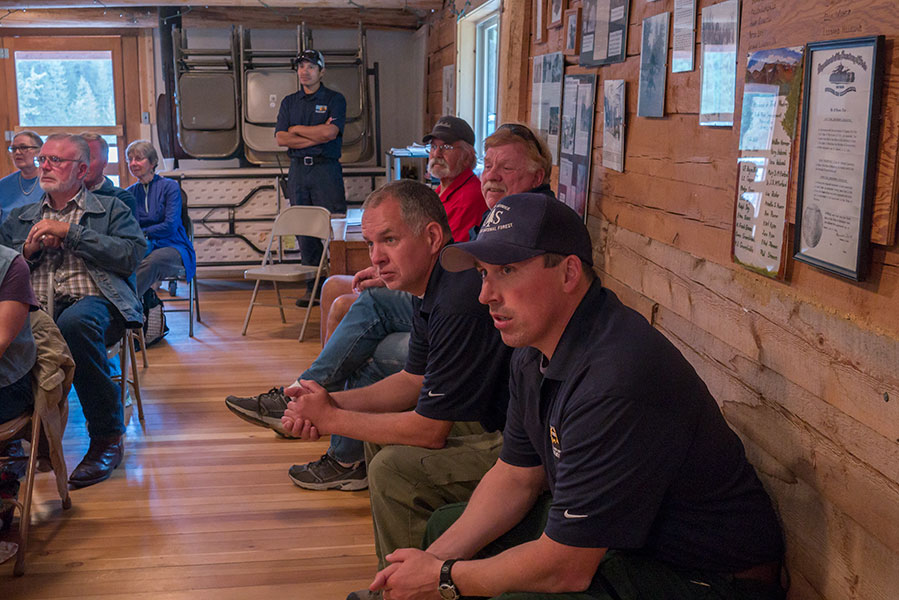
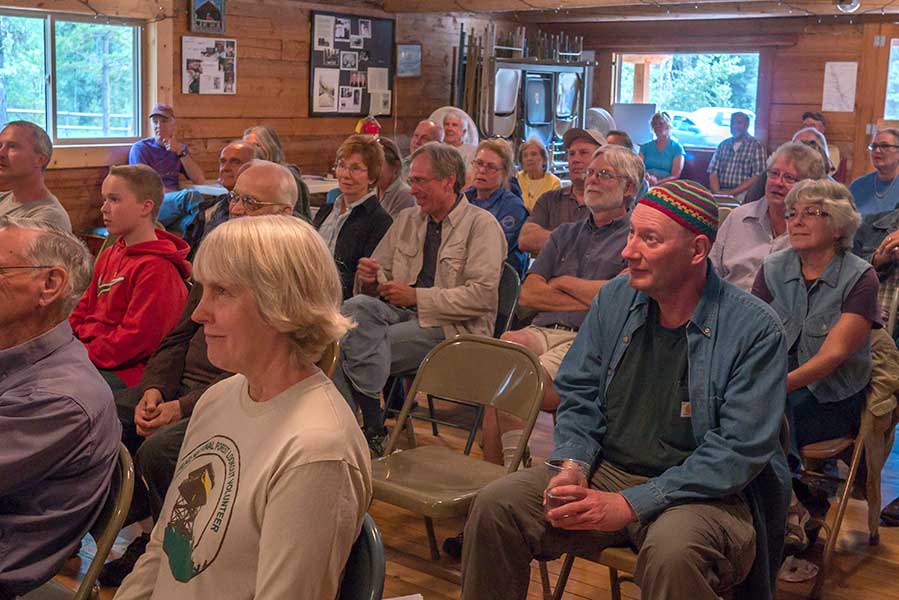
Firewise Day 2016

This year’s Firewire Day workshop will be held on Wednesday July 13, 2016 from 9:30 a.m. to noon at Sondreson Hall, immediately preceding the Summer Interlocal meeting.

Our Firewise Day agenda includes the following items:

  • A video by Jack Cohen, internationally known wildfire expert at the Fire Lab in Missoula.  The video’s title is “Your Home Can Survive a Wildfire,” with advice about how to create defensible space around your home.
  • A presentation by Angela Mallon and Lucas Wells of the DNRC.  They will report on the preliminary results of their study on optimal spacing of trees in hazardous fuels reduction projects.
  • A presentation by Lincoln Chute, Director of Emergency Services for Flathead County.  Mr. Chute will explain the county’s “Ready, Set, Go” evacuation program.  He may illustrate ingress/egress concerns with video footage from the Fort MacMurray fires.
  • Remarks by Andy Huntsberger, Fire Management Officer for the Forest Service’s Glacier View/Hungry Horse District.  He will review the fire season forecast and resources available on the North Fork this summer.  He’ll also touch on the potential for reburn in areas burned since the Red Bench Fire in 1988.
  • A review of the status of our hazardous fuels grants by Bill Swope and Carol Daly.  They also will address opportunities for landowners.
  • Tentatively, remarks by Christine Johnson, Executive Director of Firesafe Montana.  She will tell us about the Firesafe program.  The North Fork Landowners Association is a Firesafe member.

Here is the final agenda for Firewise Day.

July National Wildland Fire Potential Outlook

Here is the latest National Wildfire Potential Outlook covering July, August and September: http://www.nifc.gov/nicc/predictive/outlooks/monthly_seasonal_outlook.pdf

So, we are expecting a “normal” fire season in Northwestern Montana, which will begin as early as mid-July and last through the end of September. Normal means that we will have a number of lightning fires, and fires that occur with good position with heavy fuels on active burning days will move significantly. If we get recurring moisture that keeps the live fuels moist it can reduce the severity of fires absent wind events. But we will see those effects diminish as shrubs cure out in September.

Fire Mitigation Committee Report, Late Spring 2016

From Co-Chairs Molly Shepherd and Allen Chrisman

Hazardous Fuels Grant

The North Fork has received four hazardous fuels reduction grants since the fires of 2003. Monies have been available on a cost-share basis, with the grant paying 75% of the cost of an eligible project and the landowner contributing the remaining 25%. The Flathead Economic Policy Center has administered the grants and provided invaluable technical assistance on our behalf. We have closed out our three earlier grants and have a balance of about $20,000 remaining on the fourth. A number of landowners have committed to or are considering projects.

Our priority with the fourth grant has been to reduce hazardous fuels along the lower part of Trail Creek Road, where it passes through private property. The purpose is to improve ingress and egress, allow safer access for firefighters, and afford an escape route over the Whitefish Divide.   We’ve had a positive response from landowners. Flathead County is assisting us by chipping the slash generated by landowner treatments along the road.

The Fire Mitigation Committee tentatively expects to apply for a fifth grant when the opportunity arises. Committee members have discussed giving priority to ingress/egress projects along lower Red Meadow Road, similar to those funded along the lower stretch of Trail Creek Road. Flathead County also may support potential Red Meadow projects by chipping the resulting slash.

Information about participation in the grant program is available from Bill Swope, who may be reached at 406-250-9812 or at bhswope@gmail.com.

Firewise Day 2016

The North Fork has been recognized as a Firewise community for eleven years.  One of the requirements for recognition is to contribute a minimum of $2 per capita toward Firewise activities.  In 2015, we contributed about $8,200, most of it in volunteer time, with a landowner population approaching 500.

Another requirement for continuing recognition is to hold an annual Firewise Day event.  The 2015 workshop featured an excellent program and strong attendance.  This year’s workshop will be held on Wednesday July 13, 2016 from 9:30 a.m. to noon at Sondreson Hall, immediately preceding the Summer Interlocal meeting.

Our Firewise Day agenda includes the following items:

  • A video by Jack Cohen, internationally known wildfire expert at the Fire Lab in Missoula.  The video’s title is “Your Home Can Survive a Wildfire,” with advice about how to create defensible space around your home.
  • A presentation by Angela Mallon and Lucas Wells of the DNRC.  They will report on the preliminary results of their study on optimal spacing of trees in hazardous fuels reduction projects.
  • A presentation by Lincoln Chute, Director of Emergency Services for Flathead County.  Mr. Chute will explain the county’s “Ready, Set, Go” evacuation program.  He may illustrate ingress/egress concerns with video footage from the Fort MacMurray fires.
  • Remarks by Andy Huntsberger, Fire Management Officer for the Forest Service’s Glacier View/Hungry Horse District.  He will review the fire season forecast and resources available on the North Fork this summer.  He’ll also touch on the potential for reburn in areas burned since the Red Bench Fire in 1988.
  • A review of the status of our hazardous fuels grants by Bill Swope and Carol Daly.  They also will address opportunities for landowners.
  • Tentatively, remarks by Christine Johnson, Executive Director of Firesafe Montana.  She will tell us about the Firesafe program.  The North Fork Landowners Association is a Firesafe member.

Here is the final agenda for Firewise Day.

Wildfire Mitigation and Planning Report

The Fire Mitigation Committee prepared a North Fork Wildfire Mitigation and Planning Report in 2005 and updated it in 2009. If you would like to see a copy of this report, please click here. The report is appended to Flathead County’s Community Wildfire Protection Plan (CWPP).

The county anticipates revising its CWPP within the next year or two. The Fire Mitigation Committee expects to revise the North Fork’s plan in conjunction with the county’s revision. We’ll update our demographic information, grant history and achievements. We’ll also generate new maps of public and private fuels mitigation work. Public participation is required in the CWPP process.
Burn Permits Are Required

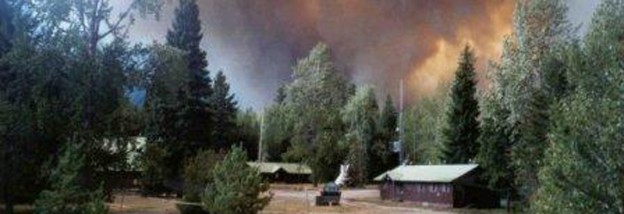
Burn Permits are Required May 1- June 30. Permits are only required in May and June and they are FREE! Call Flathead County Air Quality at 751-8144 or click here for today’s ventilation forecast. Click here to apply for a permit. 

If you have additional questions or would like information regarding survivable space guidelines, wildfire preparedness, or home assessments please call the Fire Prevention Specialist for the Kalispell Unit of the DNRC at 751-2270. For more information, see the DNRC’s website.

May 1 Wildland Fire Outlook

This is showing the Northern Rockies as a pretty normal active fire season beginning in mid-July.  We will get better predictions as we get farther into the season – the July 1 Outlook will be the one I am looking for.  
There will be a lot of activity in Alaska, Hawaii, the Southwest and the Great Basin Areas.  Glad to see that Western Oregon and Washington got good moisture over the winter.

October 1 National Fire Potential Outlook

Attached is the October 1 National Fire Potential Outlook:  http://www.nifc.gov/nicc/predictive/outlooks/monthly_seasonal_outlook.pdf.

While it states that the fire season is over in the Northern Rockies: 

Northern Rockies: Significant wildland fire potential will be normal for the outlook period October, November, and December 2015 through January 2016.

Wet storms in early September greatly reduced fire potential with most indices across the geographic area near normal conditions. Some increases occurred with the warm and dry conditions over southeastern and south central Montana but shorter days and cooler nights will keep fuel moisture rising into the fall. Some evidence of drought stress in live vegetation across the western half of the area will likely be a factor for the 2016 fire season. El Niño conditions deep into the winter suggest poor snow conditions and continuation of drought across the area.

Fire season for 2015 is essentially over for the Northern Rockies. However, significant wind events during the fall-to-winter transition could produce brief fire concerns in the fine fuels east of the continental divide until snow falls. This will likely be delayed given the forecast of El Niño conditions.

Message from Fire Chief Lynn Ogle

According to the USFS report in the Daily Interlake dated October 1, 2015, fires will continue to burn until significant RAIN and or SNOW. At this time the fires in Lincoln County continue to burn but pose NO immediate threat to Private Property.

Marston Fire is now over 7000 acres.
Goat Rock Fire is over 22000 Acres.

The fire season is being lifted in Flathead County has been moved to Open burning. However the following information should be followed.

  1. Check the weather forecast and air quality for Rain and or Wind events.
  2. Establish a fire line and clear the Perimeter around your fire, down to bare soil.
  3. Have an adequate WATER supply and EXTRA persons to help control any fire that might escape your control.
  4. NEVER leave any fire unattended!
  5. Start debris fires small and add in small amounts to insure you can keep your fire contained.
  6. Always REMEMBER that you can be held Financially Responsible for suppression costs, should your fire escape!

Lynn P. Ogle
Fire Chief, Trail Creek Irregulars

Fire Mitigation Committee Report, August 2015

Firewise Day

The Fire Mitigation Committee sponsored a successful Firewise Day workshop on July 15, 2015, preceding the Summer Interlocal meeting. About sixty people attended. Committee co-chair Allen Chrisman put together an excellent program, with presenters from all of the agencies with wildfire responsibilities on the North Fork. As ever, the committee is grateful for their long-term collaboration.
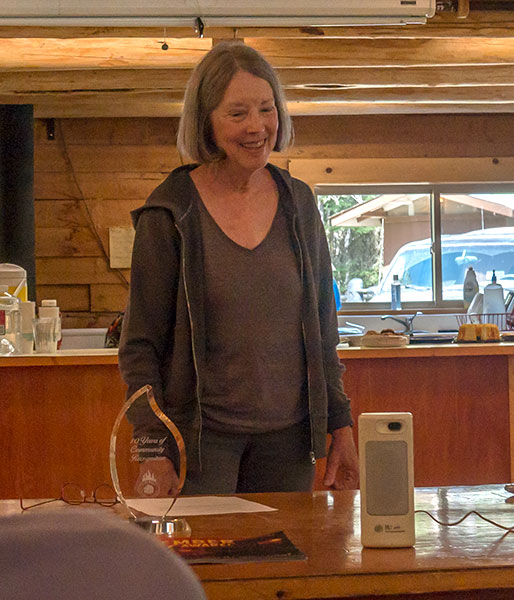
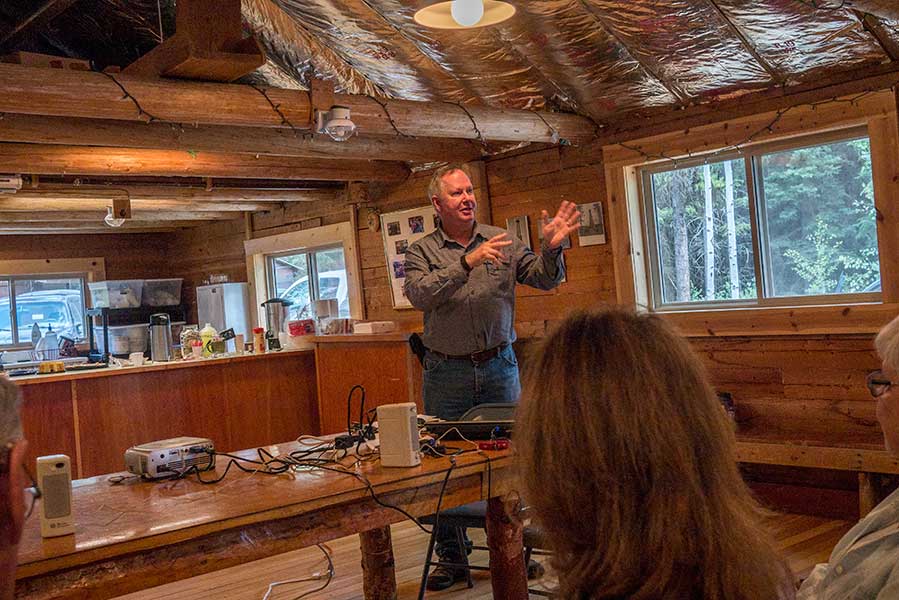
Lincoln Chute was among the presenters at the workshop. He is Flathead County Fire Service Area Manager and now a member of the Fire Mitigation Committee.   He reminded attendees that wildfire preparedness is a matter of personal responsibility. There’s only so much that firefighters can do. Furthermore, landowners can’t count on having fire engines available to save their homes, since a shortage of volunteers has made it difficult to staff engines. He urged landowners to put their addresses on posts or mailboxes marking their driveways, using reflective numbers that can be easily seen in an emergency.

Mr. Chute and other presenters also discussed the danger of ember showers, which can ignite structures or the fuels around them a long way from a fire front. Decks and vents are especially problematic in an ember shower. Presenters encouraged landowners to inspect in and around their homes, to identify places where an ember might enter or ignite flammable materials, and to take steps to mitigate any hazards. Don’t store firewood on decks and do cover the openings to woodsheds, preferably with canvas or fire-resistant material. Cut the grass around structures and keep it green. Clean up the brush around propane tanks.

Manny Mendoza of the USDA Forest Service highlighted dangerously dry conditions so far this year. The area experienced the hottest, driest June in history. Although some rain and cooler temperatures in early July moderated the danger, Mr. Mendoza remarked that we’re still on the same track we were on in 2001 and 2003, when we had massive fires on the North Fork.

Grant Status

Progress has been made on the Trail Creek ingress-egress project. Duke and Naomi Hoiland have done significant work along their stretch of Trail Creek Road. Other landowners with frontage on the road are initiating fuels reduction projects, with assistance from the North Fork’s fourth cost-share grant.

Wildland Fire Potential Outlook – Aug. 1

Here is the latest Wildland Fire Potential Outlook:  http://www.nifc.gov/nicc/predictive/outlooks/monthly_seasonal_outlook.pdf.

They have been pretty accurate this year in their forecasts. Here are a couple of excerpts from the Outlook regarding the Northern Rockies:

Northern Rockies: Above normal significant wildland fire potential will continue over northern Idaho and northwestern Montana from August through mid-September, with conditions returning to normal for the remainder of the outlook period through November. The rest of the Area will see normal significant wildland fire potential for the entire outlook period.

Long range data suggests that typical hot and dry conditions can be expected for August and early September, which would promote normal activity during the peak of fire season in most areas, except northwest Montana and N Idaho where above normal activity is possible. The same data suggests a pattern shift to a cool, wet pattern during the second half of September. Should this occur, it should be sufficient to begin to wind down fire season 2015.

Looking beyond September, the Northern Rockies Region is typically out of fire season. However, significant wind events during the transition from fall to winter can sometimes produce brief flare ups of activity mainly east of the Continental Divide until the snow falls. Given that this will be an El Niño fall and early winter, chances are good that the arrival of the winter snow will be late.
While it mentions elsewhere in the report that the dead fuels in Northern Idaho and Western Montana have extremely low moisture content, they also note that the live fuels are cured, dry and available. We might be in a little better shape up the North Fork in terms of live fuels, especially those that are shaded and not out in the open. This is small consolation, however, since as we have observed, fires will move quickly through the dead component and consume the live component even if the live component does not actively assist in the spread.

So, I’m looking forward to the middle of September and hope that cooler, moister conditions move in as forecasted. Until then, keep your fire tools sharp and your water handy…

Below is the most recent ERC (Energy Release Component) graph for our area (Glacier Park and Bob Marshall Complex) which represents the receptiveness and volatility of the forest fuels:

image

You can see that the moisture we got in July moderated the ERC’s for 2015 (blue line) significantly compared to the path they were on before the 4th of July. We are just returning to the levels we saw at the first of July, but are well ahead and above an average year (grey line), and will be getting back close to the max again (red line). Let’s hope we get good moisture out of the system forecasted early this week, without the lightning….